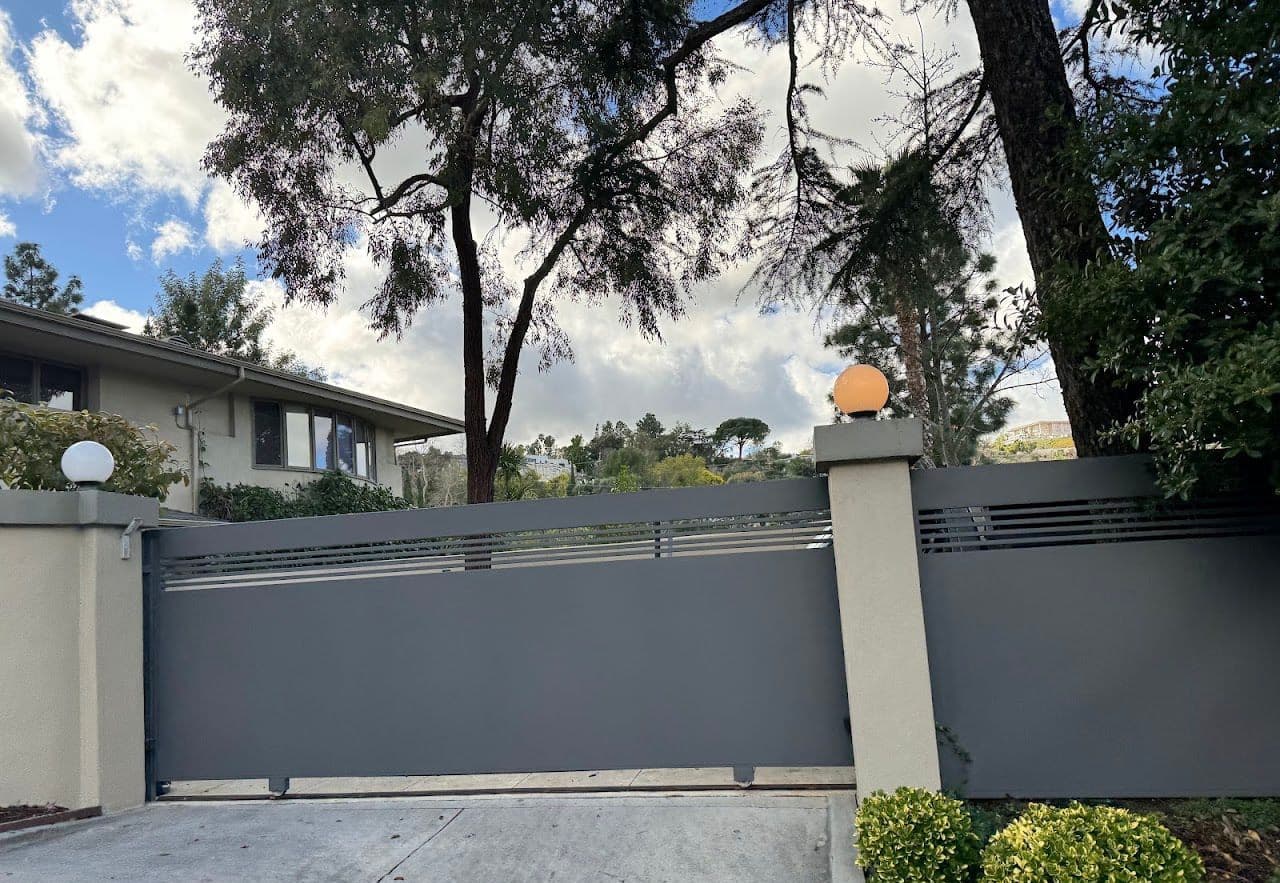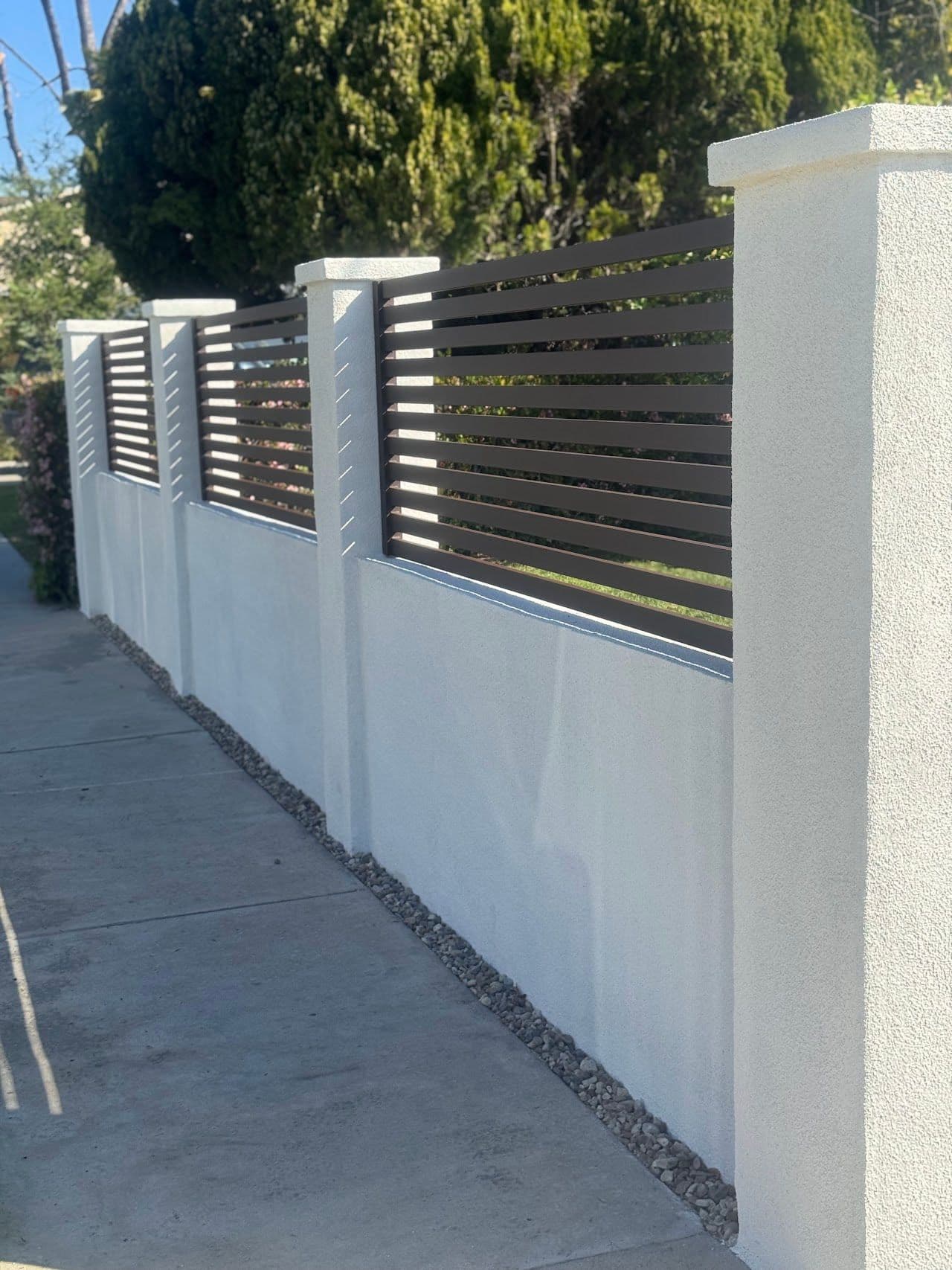

Short answer
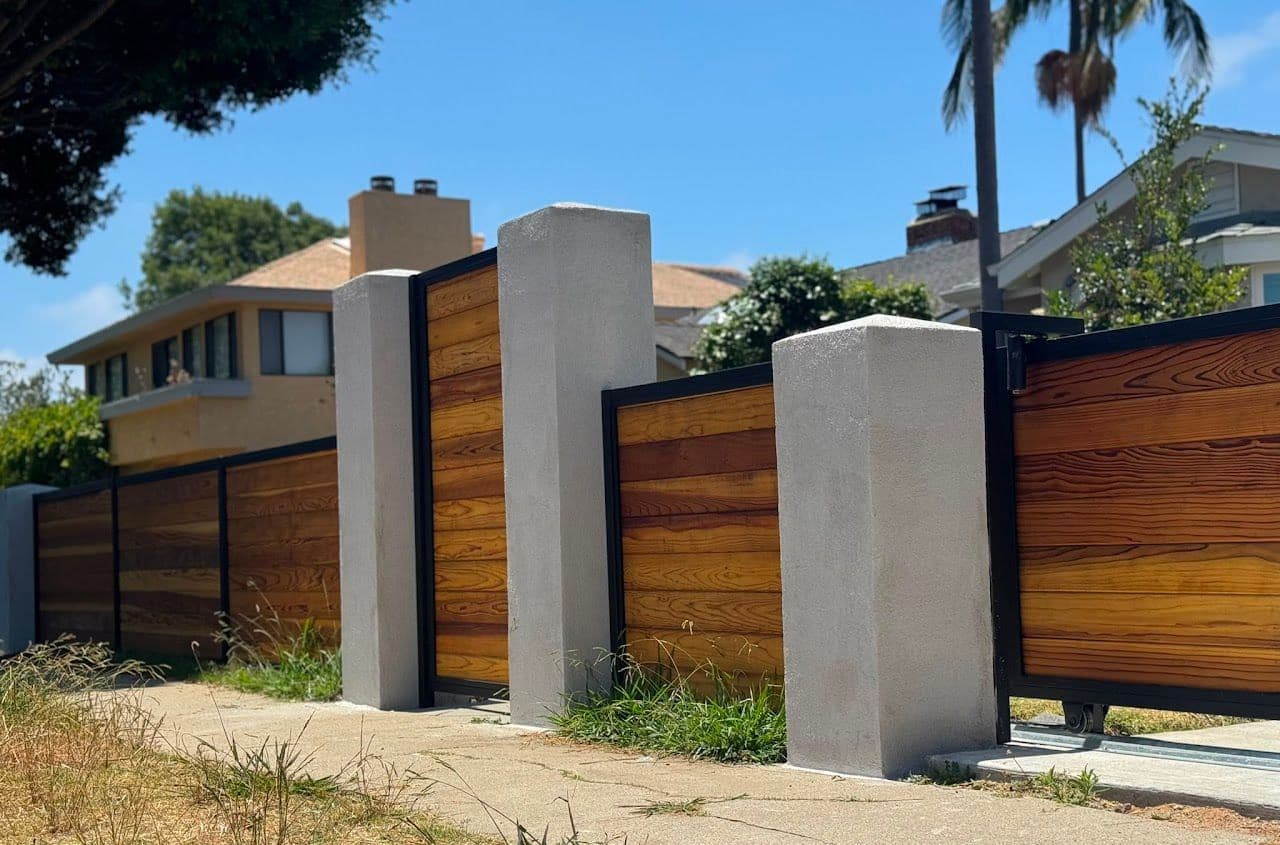
A horizontal redwood fence on steel posts pairs warm wood boards with posts that do not rot at the ground line. The boards run between the posts, so post spacing sets how far each board spans and how straight the line stays over time. In Los Angeles sun, unsealed redwood weathers to a silver gray; a clear or tinted sealer on a regular cycle keeps the color. The steel posts need a sound coating where they meet the concrete.
In this guide
Why steel posts under wood boards
The weak point of most wood fences is not the boards. It is the post, right at the ground line, where wood stays damp after watering and rot starts. A steel post does not rot there. That is the main reason a horizontal fence is often built with redwood boards and steel posts: the part that carries the fence lasts, and the part you see stays wood.
Steel posts are also slimmer than wood posts for the same strength. On a horizontal fence that matters, because the post is part of the look. A thin black post reads as a clean line between long runs of wood.
Board size, gap and span
On a horizontal fence, every board spans from one post to the next. That span decides most of the details:
- Post spacing. Longer spans need thicker boards or a hidden rail, or the boards sag and twist. Shorter spans keep the boards flat.
- Board size. Wider boards give more privacy with fewer gaps; narrower boards give a finer pattern.
- The gap. A small, even gap lets wind through and lets the wood move. Butting boards tight looks solid on day one and buckles later.
The gap also sets privacy. A wider gap shows more of the yard behind it, so the gap is a design choice, not a leftover.
The gate in a horizontal fence
A gate in this kind of fence uses the same boards and gap, so it disappears into the line when it is closed. It hangs on its own posts, sized for its weight, with hinges and a latch that suit a wood gate in a steel frame. A frame keeps the boards square, so the gate keeps closing years later. You can see one in our redwood fence and repaint project.
How redwood ages in the Valley sun
Redwood holds up well outdoors, but sun is hard on any wood surface. Left bare, the color goes from warm red to a silver gray. Some owners like that look; it does not mean the boards are failing.
If you want to keep the warm color, the boards need a clear or tinted exterior sealer, renewed on a regular cycle. South- and west-facing runs need it sooner than shaded ones. Check the fence once a year: when water stops beading on the surface, it is time.
Lights, lanterns and caps
Because the posts are steel, lanterns and post lights can be planned into the line from the start, with the wiring run before the boards go on. A cap or top board ties the top edge together and sheds water off the end grain of the boards below.
When horizontal is the wrong choice
A horizontal fence is harder to step up and down a steep slope than a vertical one, because each board wants to stay level. On a strong slope, compare stepped panels with a vertical design before you decide. And where a fence has to be a pool barrier, the rules on climbable gaps apply to the board pattern, so check those rules first. Our guide to fence permit rules covers how height is measured on a slope and when a pool barrier needs a permit; ask the building department which barrier rules apply to the board pattern.
If you are comparing materials, see wood vs. composite vs. vinyl, or look at what we build for fences and gates.
From our own jobs
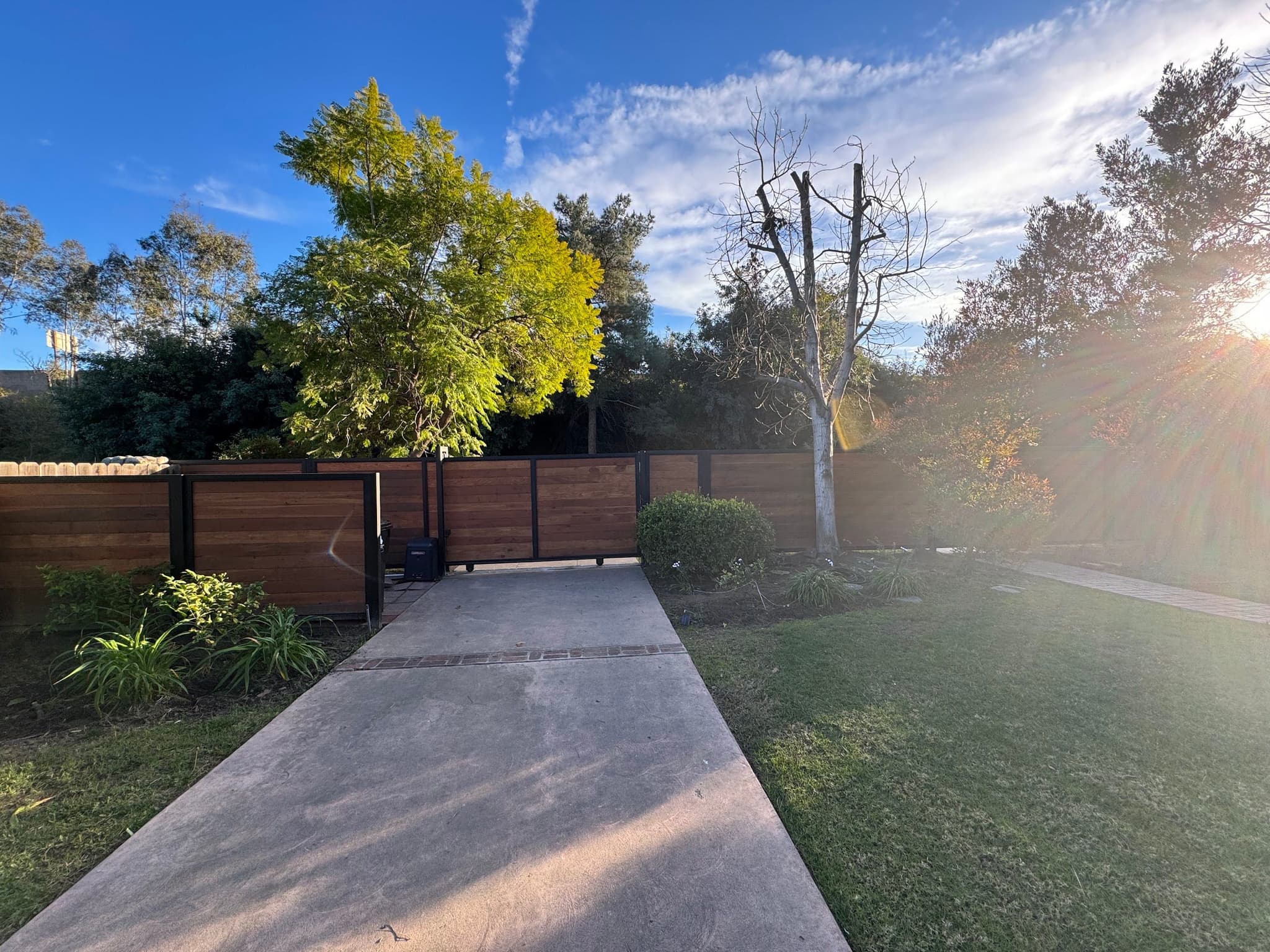
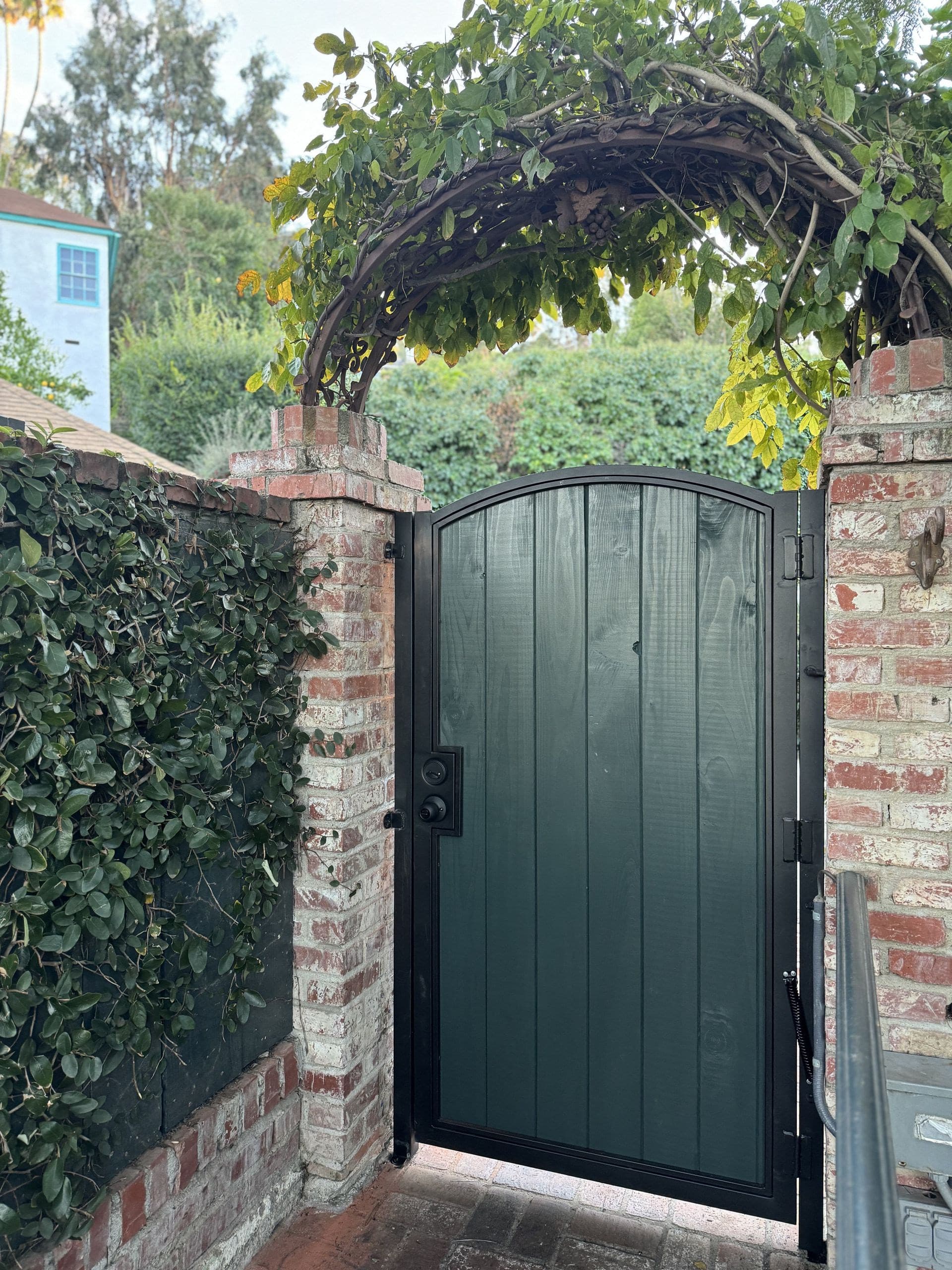
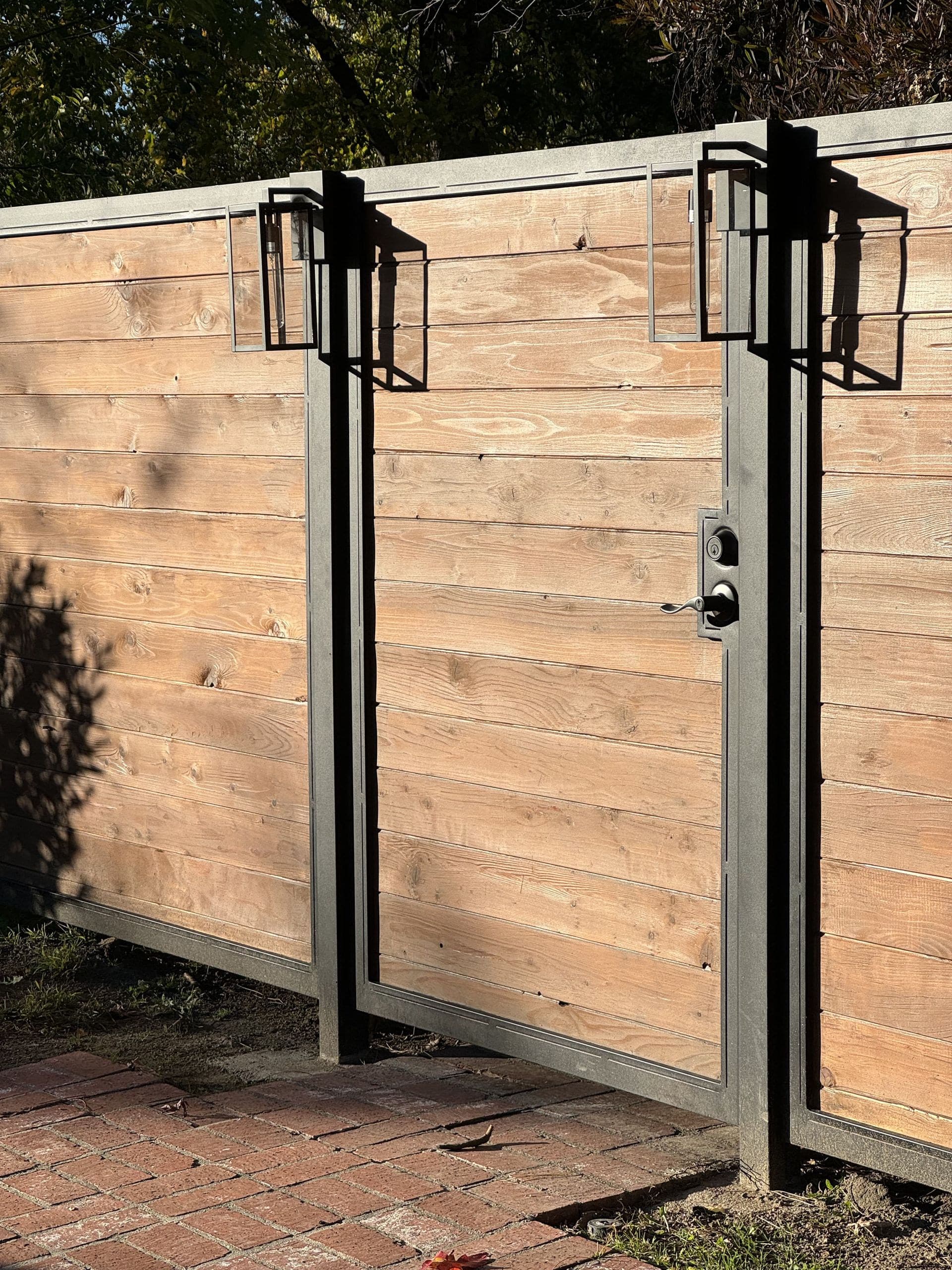
Real job photos. We do not show where each one was taken.
See the whole job: Modern metal slat gate and fenceKey takeaways
- Steel posts do not rot at the ground line, which is where most wood fences fail first.
- Post spacing sets how far each board spans; long spans need thicker boards or a hidden rail.
- An even gap between boards lets wood move and sets how private the fence is.
- Bare redwood weathers to silver gray in the sun; a sealer on a regular cycle keeps the color.
- Steep slopes and pool barriers change the design, so check them before choosing horizontal.
Questions people ask
Do I have to seal a redwood fence?
No. Unsealed redwood weathers to a silver gray and keeps working as a fence. A sealer is about keeping the warm color and slowing surface wear, not about keeping the fence standing.
Why not use wood posts for a wood fence?
You can, and many fences do. Wood posts are the part most likely to rot at the ground line. Steel posts avoid that, and they are slimmer for the same strength, which suits a horizontal design.
Can a horizontal fence follow a slope?
Yes, by stepping the panels so each run stays level. On a steep slope the steps get large, so compare it with a vertical design before deciding.