
Decks in Southern California: cost, materials and what actually wears out
What drives deck cost in Los Angeles, how wood and composite really behave in intense sun, and which parts of a deck fail first.
In Southern California, the right fence material depends on your specific site conditions — UV exposure, soil type, slope, and proximity to the coast or wildfire zones — rather than on price alone. Cedar and redwood offer the most design flexibility with periodic maintenance, capped composite delivers a consistent look with minimal upkeep, and reinforced vinyl suits flat suburban lots where impact risk is low. For any run that is long, sloped, or carries a heavy gate, the frame and post system matters more than the visible panel material.
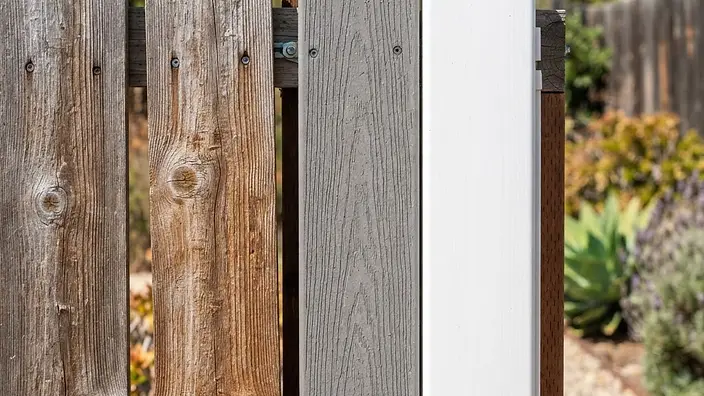 Editorial illustration — not a Fency Builders project. Three materials, three failure modes under the same Southern California sun.
Choosing a fence material in Southern California is not the same decision it is in Seattle or Chicago. The failure modes here are driven by relentless UV radiation, thermal cycling, expansive clay soils, salt-laden coastal air, and periodic seismic movement — not by the moisture and freeze-thaw cycles that dominate most national buying guides. Understanding what your specific yard actually does to a fence over time is the foundation of a sound material decision.
Ultraviolet exposure is one important material-selection factor. South- and west-facing runs can receive more direct sun than shaded orientations, so exposure should be documented before choosing a product and finish. UV breaks down lignin in wood, degrades binders in lower-grade composite, and embrittles thin vinyl extrusions. This is not theoretical — you can see it in any established neighborhood: the shaded side of a fence often looks years younger than the sun-exposed side.
Thermal cycling compounds the problem. On a hot inland day, a dark-colored composite panel can reach surface temperatures well above ambient air temperature, expanding and contracting with every cycle. Over years, fasteners work loose, posts shift, and panels that were installed tight begin to show gaps or bowing.
Los Angeles sits on expansive clay soils across much of the basin and hillside areas. Clay swells when the brief winter rains arrive and contracts during the long dry season. A post set without adequate depth or diameter will heave, lean, or crack its footing as the soil moves beneath it. Post and footing design must follow the observed soil, load, grade, product system, and applicable approved requirements rather than a national rule of thumb. Confirm current requirements with your local building department.
Coastal properties — from the Palisades down through El Segundo and into the South Bay — add salt air to that list. Salt accelerates corrosion of fasteners, hinges, and any uncoated steel component. Hardware that performs fine in the Valley can fail within a few seasons at the beach.
Finally, hillside and canyon lots face two additional pressures: seismic movement and wildfire defensible space requirements. Defensible space rules in Los Angeles affect what can be planted within certain distances of a structure, and some interpretations extend to how a fence is constructed and what materials are appropriate near brush zones. Confirm current defensible-space, product-listing, and fencing requirements with the governing agencies before specifying materials.
Cedar and redwood remain the materials most homeowners picture when they imagine a California fence — and for good reason. Both species are dimensionally stable relative to pine, contain natural oils that resist insect damage, and take stain and paint well. They accommodate virtually any design: vertical board-on-board, horizontal slat, shadowbox, louver, and custom patterns are all achievable in wood in a way that composite and vinyl panels cannot easily replicate.
Pressure-treated pine costs less upfront but moves more with Southern California's thermal cycling, which means more seasonal checking and a higher likelihood of fastener loosening over time. It is a defensible choice for utility fencing or for runs where appearance is secondary.
The honest maintenance conversation: wood left without any finish will weather to silver-grey. That is not structural failure — a properly built cedar fence can last for years without refinishing and remain sound. But the color will change, boards will check (develop surface cracks along the grain), and any areas with post-to-board contact that trap moisture will degrade faster. If you want to preserve color and minimize checking, plan on periodic cleaning and a penetrating oil or stain. How often depends on sun exposure; a west-facing run in Thousand Oaks needs more attention than a shaded east-facing run in Pasadena.
Post and hardware selection matters more than most homeowners realize. A cedar board nailed to an undersized post or attached with untreated fasteners will fail at the post and the connection point long before the board itself gives out. For coastal installations, specify stainless or hot-dipped galvanized hardware — not standard zinc-plated.
Capped composite — boards or panels with a protective polymer shell over a wood-fiber core — addresses the primary maintenance burden of wood: it does not require periodic refinishing, resists fading substantially better than uncapped products, and will not splinter. For a homeowner who wants a clean, consistent privacy wall and has no interest in a maintenance schedule, it is a sound choice.
The material's properties create specific installation requirements. Composite is heavier per linear foot than dimensional lumber, which means the post and rail frame carries more load. A composite panel on a frame that was sized for wood will telegraph every flex and deflection — you will see it in the panel line over time. Frame sizing, post diameter, and footing depth should be calculated for composite's weight, not carried over from a wood specification.
Panel surface temperatures in direct Southern California sun are worth understanding before you commit. Dark-colored composite panels in full sun can become uncomfortably hot to the touch during summer afternoons. For yards where children or pets will be in contact with the fence, this is a practical consideration. Lighter colors and profiles designed with ventilation channels perform better in this regard.
Once installed correctly, maintenance is limited to periodic washing to remove dust, algae, and debris — a meaningful advantage in Los Angeles's long dry season, when dust accumulates steadily.
Vinyl is the easiest material to clean and requires no painting, staining, or sealing. For flat suburban lots — much of the San Fernando Valley, the South Bay, and the eastern SGV — where the fence carries no significant structural load and impact risk from vehicles or heavy debris is low, properly specified vinyl performs reliably.
The qualification "properly specified" is important. Thin, low-grade vinyl extrusions become brittle after years of UV exposure, and in Southern California that process happens faster than national product literature suggests. Profiles with continuous internal aluminum reinforcement handle UV degradation, wind loads from Santa Ana events, and the stress concentration at gate posts far better than hollow vinyl alone. Specify the reinforcement, not just the profile.
Gates deserve particular attention in any vinyl installation. A gate is a cantilevered load carried by its hinge post, and vinyl without internal steel or aluminum at that post will deflect, sag, and eventually fail the hinge connection. This is not a material failure so much as a framing failure — but it is a common one.
Some Los Angeles sites require a frame-first approach regardless of which panel material you choose. Hillside lots with grade changes across the fence run, properties in high-wind corridors (the Sepulveda Pass, the Santa Clarita Valley, coastal bluffs), and any installation that includes a wide or heavy gate all place demands on the structural frame that exceed what a standard residential specification addresses.
Tube steel and aluminum are options to evaluate for demanding spans, gates, grades, and exposures. Material alone does not establish structural performance; the complete post, connection, coating, footing, load, and approved design must be compared. Steel frames are commonly considered for long runs, changing grade, frequent-use gates, and automated assemblies, subject to the approved system design.
Hybrid construction — steel or aluminum frame with wood or composite infill — is a common and effective approach. You get the structural performance of metal with the visual character of wood or the low maintenance of composite. It is not a compromise; in many Southern California applications it is the right answer.
If your property is in a Very High Fire Hazard Severity Zone, confirm with your local fire authority and building department whether specific materials or construction methods are required or recommended before finalizing any specification.
This is the question homeowners most often wish they had asked before signing. Two fence quotes at similar numbers can represent substantially different outcomes if one specifies 4×4 wood posts at standard depth and the other specifies steel posts in engineered footings — or if one includes capped composite and the other uses an uncapped product.
Request that every proposal specify: post material, diameter, and embedment depth; footing dimensions and concrete volume; rail material and spacing; panel or board product including manufacturer and grade; fastener specification; and hardware manufacturer for gates. A proposal that describes "wood fence" or "vinyl fence" without these details cannot be compared to one that does.
A well-scoped estimate from a licensed California contractor should read like a material list, not a description. Before any number is meaningful, the estimator should have walked the run, noted sun exposure and grade changes, identified soil type, and asked about gate locations and automation intent. Request a line-item breakdown that covers post system, frame, panel material, hardware, and any grading or demo work separately. That breakdown protects you at change-order time and makes it possible to compare proposals from different contractors on equal terms.
Reviewed September 1, 2026. Rules and product requirements can change; confirm the parcel, approved documents, and selected system before relying on this guide.
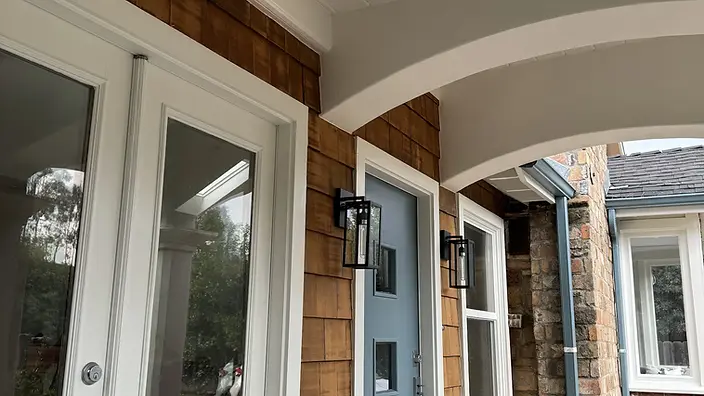 Horizontal wood slat privacy fence with metal posts
A cedar or redwood fence built with properly set posts, correct fasteners, and adequate post depth in Los Angeles clay soils can remain structurally sound for many years. Longevity depends far more on the post system and hardware than on the boards themselves — posts that heave in clay or corrode at the base will fail long before well-maintained cedar boards do. Sun exposure on south- and west-facing runs accelerates surface weathering and checking, but that is an appearance issue rather than a structural one in most cases.
Capped composite fencing eliminates the refinishing schedule that wood requires and holds a consistent appearance longer on high-UV runs, which makes it a sound choice for homeowners who want a low-maintenance privacy wall. The trade-off is that composite panels are heavier and get hotter in direct sun than wood, both of which have installation implications — the frame must be sized for the added weight, and surface temperatures on dark panels can be significant during summer afternoons. Whether that trade-off is worth it depends on your maintenance preferences, design goals, and which direction the run faces.
Steel or aluminum posts set in properly engineered footings offer the most reliable performance in high-wind conditions, which is why they are the standard for hillside lots and exposed runs in wind corridors like the Sepulveda Pass or Santa Clarita Valley. For any material, reducing the sail area — using open-profile designs, louvers, or spaced boards rather than solid privacy panels — lowers the wind load the fence structure must resist. Confirm wind load requirements and post engineering standards with your local building department before finalizing the specification.
Permit requirements in Los Angeles depend on fence height, location on the property, zoning, and whether the fence is in a hillside or hazard zone — requirements vary by jurisdiction and are updated periodically. Always confirm current permit thresholds, setback requirements, and height limits with your local building department before beginning any fence project. A licensed California contractor (CSLB license verifiable at cslb.ca.gov) will typically handle permit research and applications as part of a scoped project.
Salt air accelerates corrosion of fasteners, hinges, and any uncoated ferrous metal, so coastal installations require stainless steel or hot-dipped galvanized hardware regardless of which panel material is chosen. Aluminum framing outperforms standard steel in salt-air environments because it does not rust, and capped composite panels resist the moisture cycling and UV combination that coastal exposures create. Cedar and redwood can perform well at the coast when built with the correct hardware, but require more frequent inspection of fasteners and post bases than the same fence would need in an inland location.
Tell us the property, the scope, and what matters most. Licensed California contractor · CSLB License #1104099.
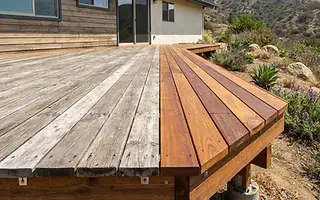 Outdoor LivingEditorial illustration
What drives deck cost in Los Angeles, how wood and composite really behave in intense sun, and which parts of a deck fail first.
 Gates & AccessEditorial illustration
Why automatic gates fail, how to tell a mechanical problem from an operator problem, the safety devices that must work, and a maintenance routine that prevents most calls.
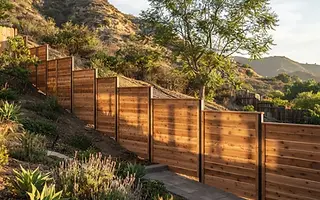 PlanningEditorial illustration
Fence costs in Los Angeles are driven by soil, slope, access, and structure — not just materials. Here's how to budget and compare bids accurately.