Short answer
Most automatic driveway gate failures are mechanical, not electronic. Hinges, rollers, the track and the posts go out of alignment, the operator works harder to move a gate that is now binding, and the motor or gearbox eventually fails from that strain. The reliable diagnostic is to disconnect the operator and move the gate by hand: if it is stiff, drags or does not stay put, the problem is the gate. Safety devices — reversing sensors and photo eyes — are not optional accessories and must be tested regularly.
An automatic gate is two systems that get blamed for each other. There is the gate — a heavy moving structure on hinges or rollers, hung on posts, exposed to weather. And there is the operator — a motor, a control board, sensors, remotes and a power supply.
When a gate stops working, inspect both systems before replacing parts. A binding frame, shifted post, damaged track, power fault, control board, sensor, battery, or operator can produce similar symptoms; the manual-release test helps separate mechanical resistance from operator-side faults.
The one test that tells you which system is at fault
Use the manual release to disconnect the operator, then move the gate by hand.
- Smooth, even, stays where you leave it — the mechanical path does not show obvious resistance; continue with the operator, power, controls, remotes and safety-device diagnostics in the manufacturer procedure.
- Stiff, dragging, catching at one point, or drifting closed on its own — mechanical correction should be evaluated before the operator is returned to service.
Mechanical resistance can increase load on an operator. Correcting the identified cause before replacing components can reduce repeated failure, but the diagnosis and repair must follow the installed system's documentation.
What fails on swing gates
- Hinges, especially when undersized for the leaf weight or never lubricated.
- The gate post and its footing. A gate post carries a cantilevered, moving load and needs a deeper, larger footing than any line post. A post that has rotated even slightly puts the leaf out of alignment along its whole arc.
- The frame, if it lacks a diagonal brace or tension cable, which lets the leaf rack out of square and drag at the latch side.
- Slope interference, where a leaf that cleared the driveway when new now catches as the surface settles.
What fails on sliding gates
- Rollers, which wear and seize.
- Track debris. Leaves, gravel and dirt in a ground track are a common cause of a slide gate reversing.
- The guide rollers at the post, which keep the gate vertical.
- Cantilever hardware and truck assemblies, on gates with no ground track.
- Ground movement, which can put a track out of level enough to bind.
The operator side
When the mechanical side is genuinely sound, look at:
- Power. Circuit, transformer, or in solar and battery-backed systems, a battery near end of life. Marginal power produces intermittent behaviour, which is why "works sometimes" is such a common description.
- Photo eyes. Misalignment, dirt, spider webs, moisture or a low sun angle straight into the lens will all trigger a reverse.
- Remotes and receivers. Batteries first, then range and interference.
- Limit settings. If the gate stops short or slams, the limits have drifted.
- Force settings. These exist for safety. Raising the force to overcome resistance is treating a warning as an inconvenience.
Safety is not optional
Automatic vehicular gates are heavy powered machinery on a residential property. Entrapment protection — photo eyes and inherent reversing sensing — exists because a closing gate can seriously injure a person or a child. Test it monthly: obstruct the photo eye beam while the gate is closing and confirm it reverses.
A gate that reverses "for no reason" is doing its job and telling you something. Disabling the sensor to stop the annoyance removes a required protective function and can create a serious hazard.
A maintenance routine that supports reliable operation
Monthly, two minutes: clear the track or swing path, test the photo eyes, listen for new noise.
Twice a year: lubricate hinges or rollers with an appropriate lubricant, tighten hardware, wash the track, check that the gate is still level and closing to the same point.
Annually: full service — alignment, footing and post check, operator inspection, battery test, safety device verification, and corrosion check on hardware. In coastal areas like Pacific Palisades and Playa del Rey, coastal exposure can accelerate corrosion, so hardware and coatings should follow current manufacturer specifications for the installed system.
Authorized users: know where the manual release is and follow the operator manual for safe use.
When repair stops being the answer
Replace rather than repair when the gate frame itself is failing, when the posts or their footings have moved, when the operator is obsolete and parts are no longer available, or when the gate was undersized for its opening from the start. The design factors that reduce those risks — leaf weight, operator sizing, slope, post and footing design — are covered in automatic driveway gates: choosing the type and what fails first.
And if the fence around the gate is showing its own age, the inspection method in fence repair vs. replacement applies to the rest of the run. Gate and fence conditions should be reviewed together because gate performance depends on the posts, footings, alignment, and adjoining run.
From our own jobs
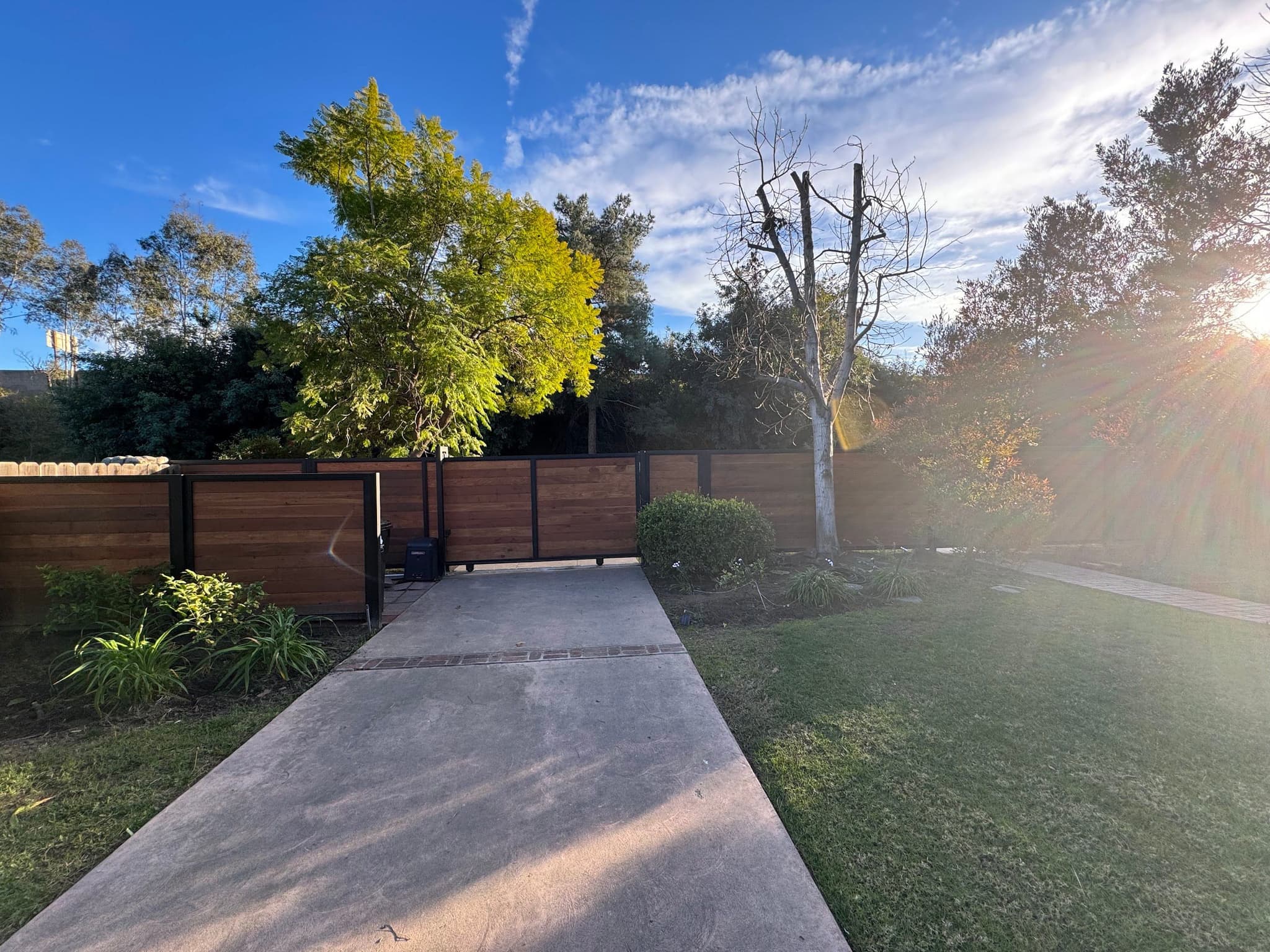
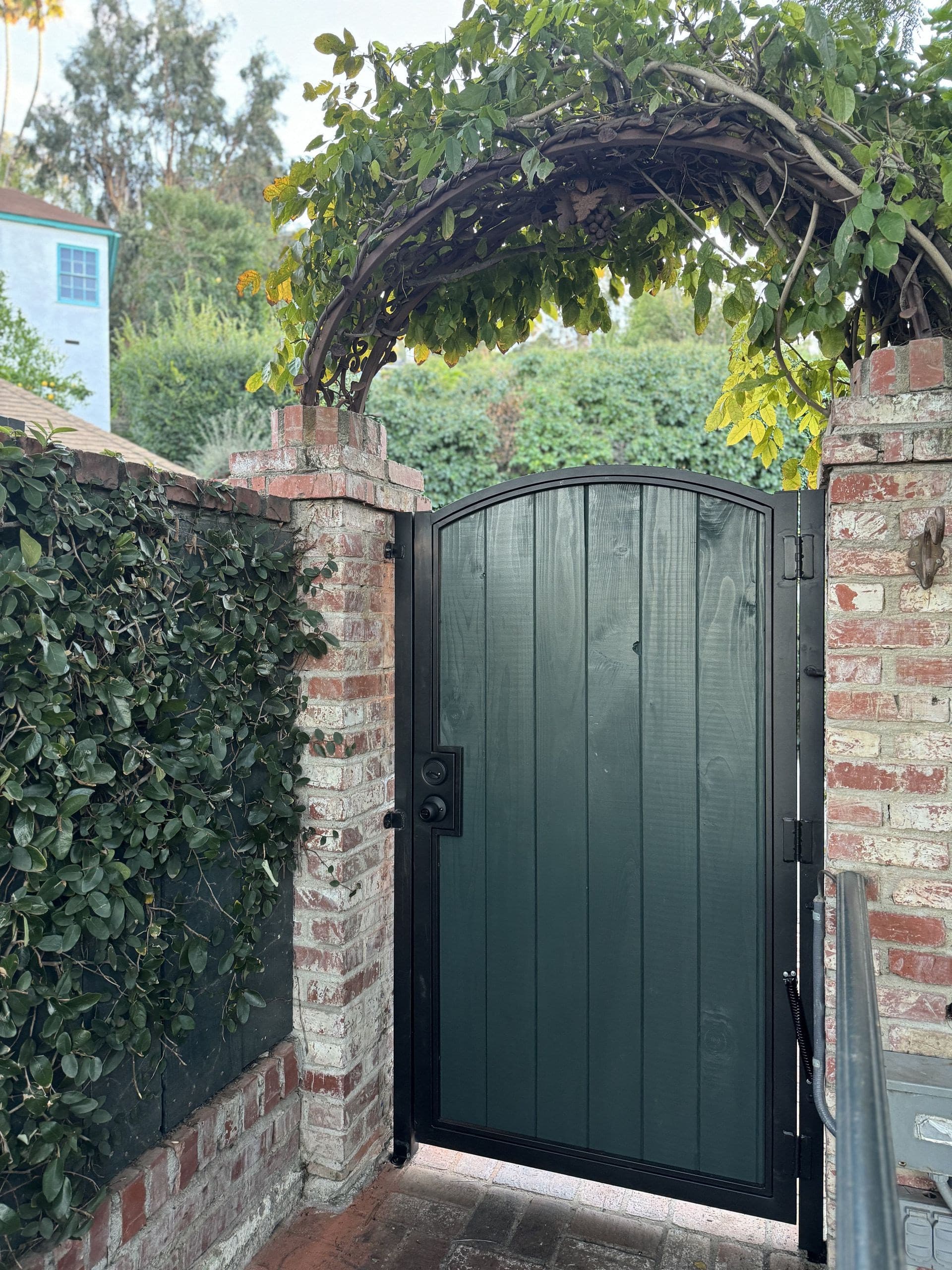
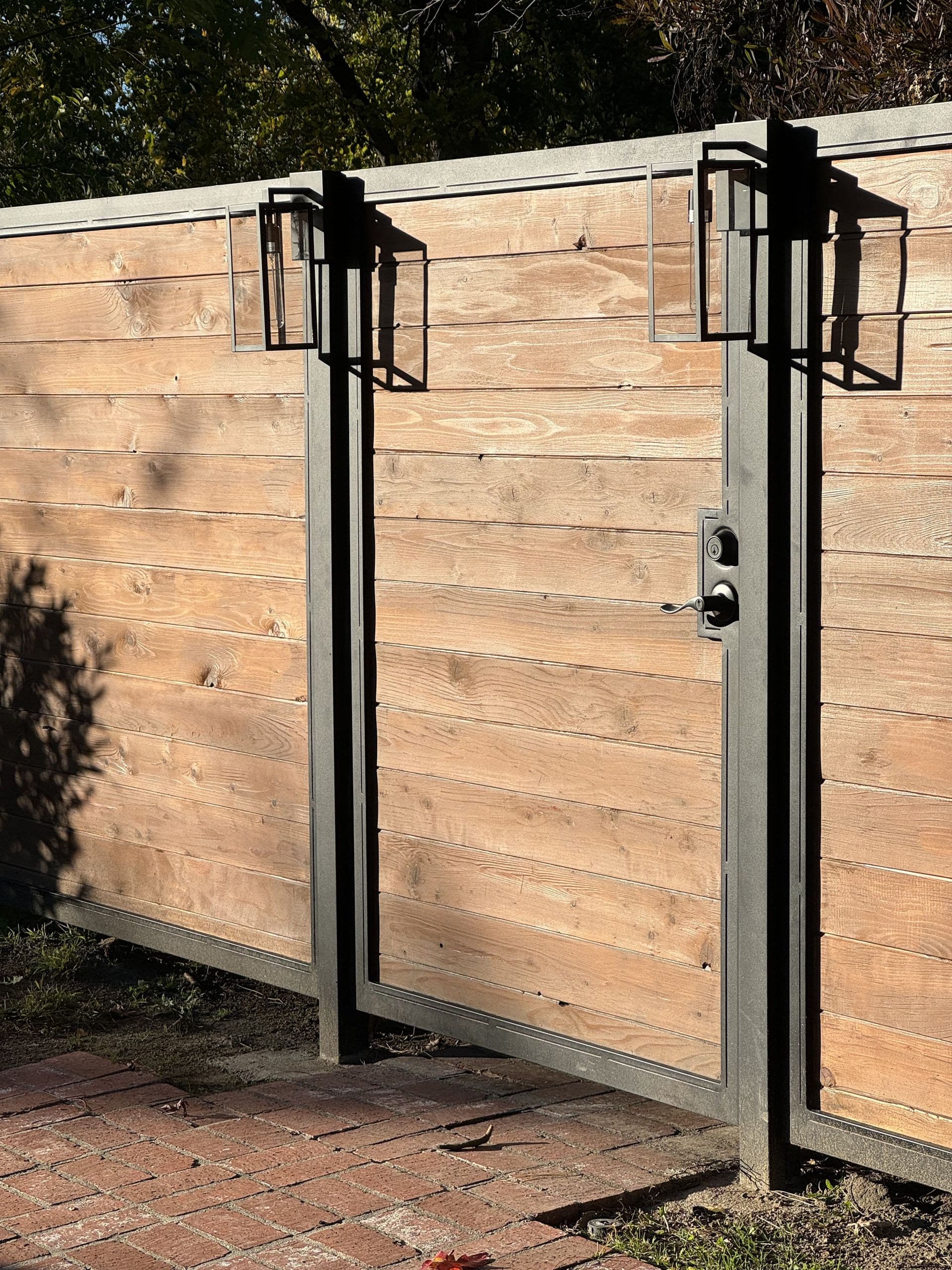
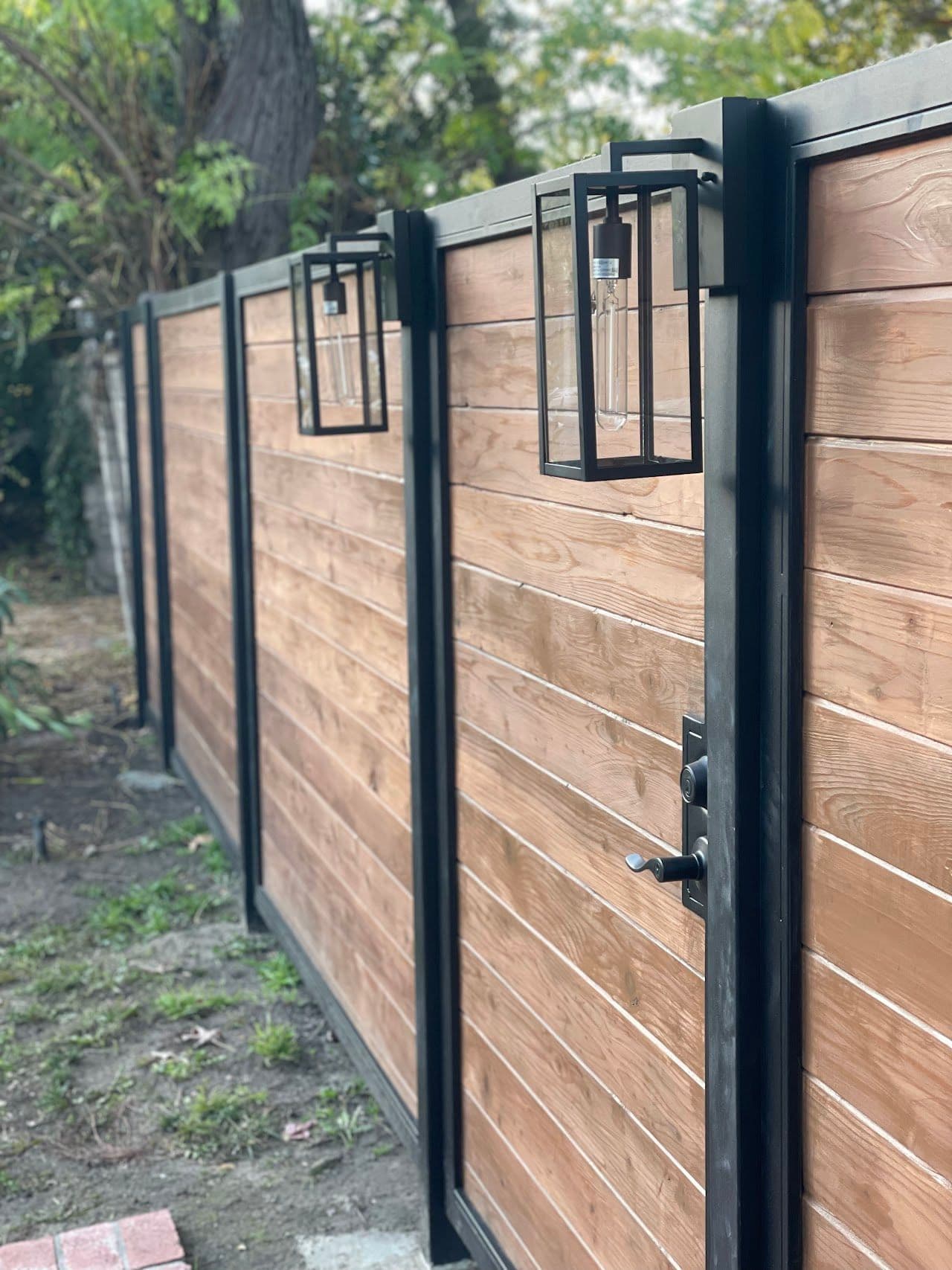
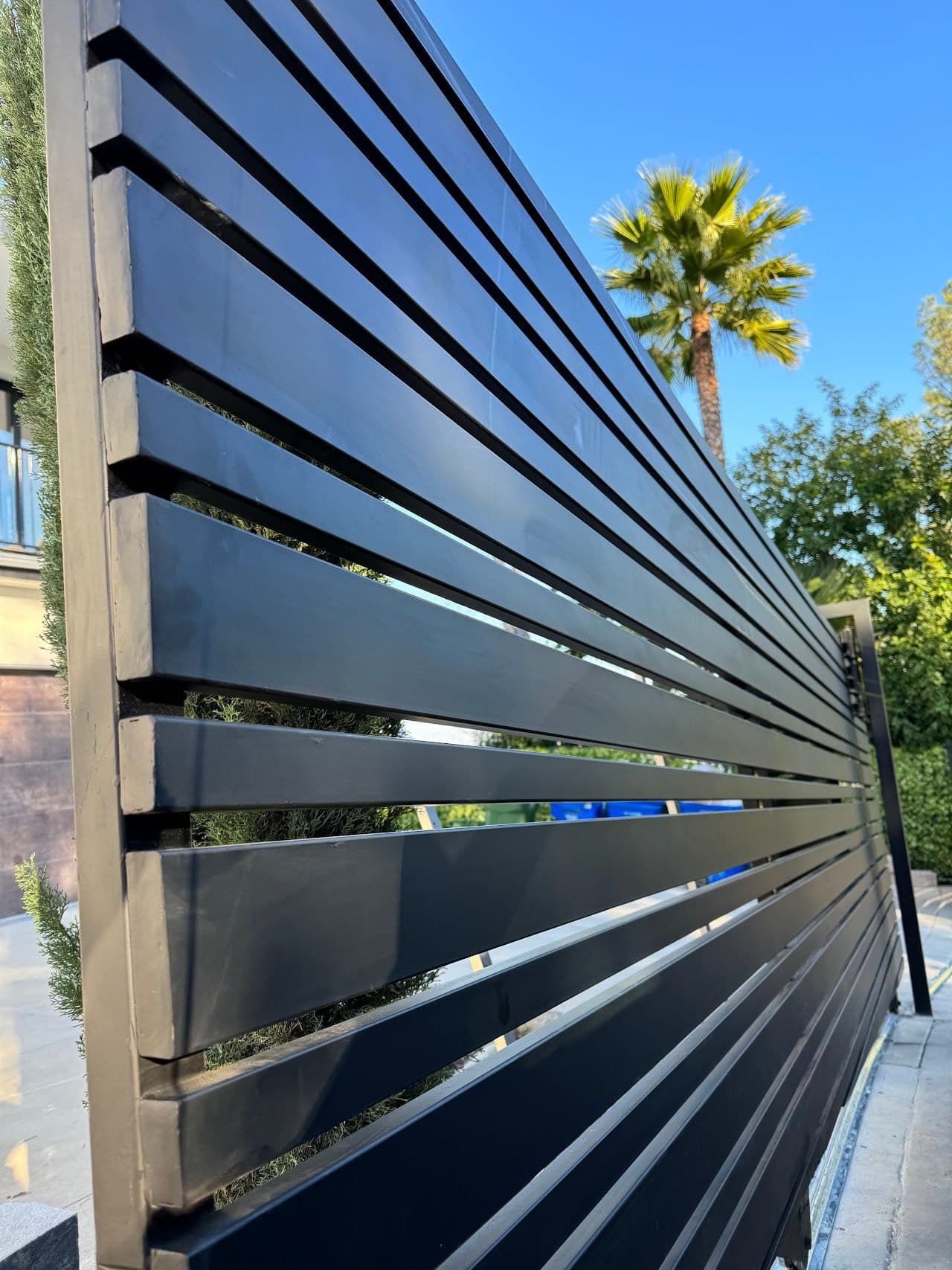
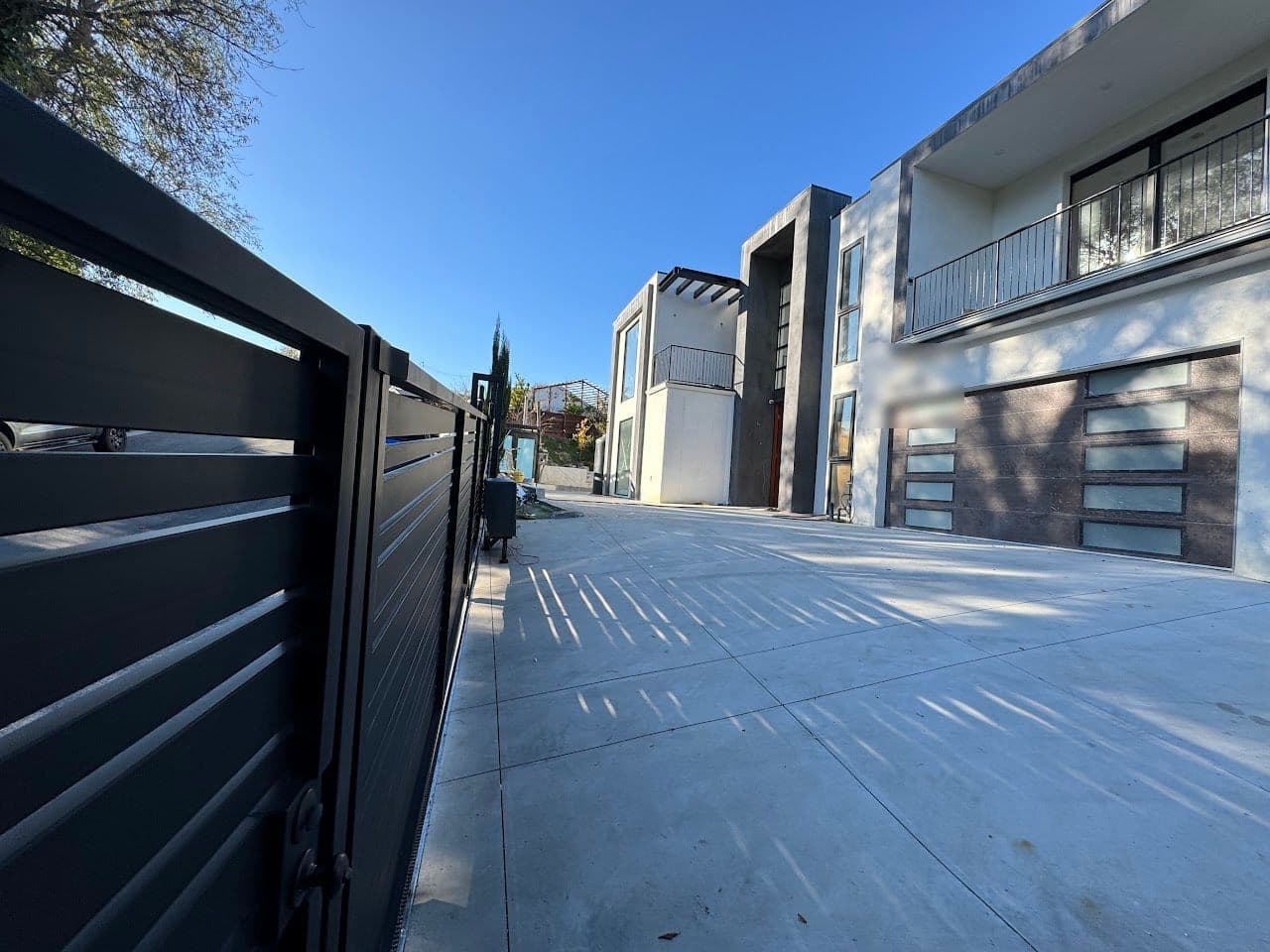
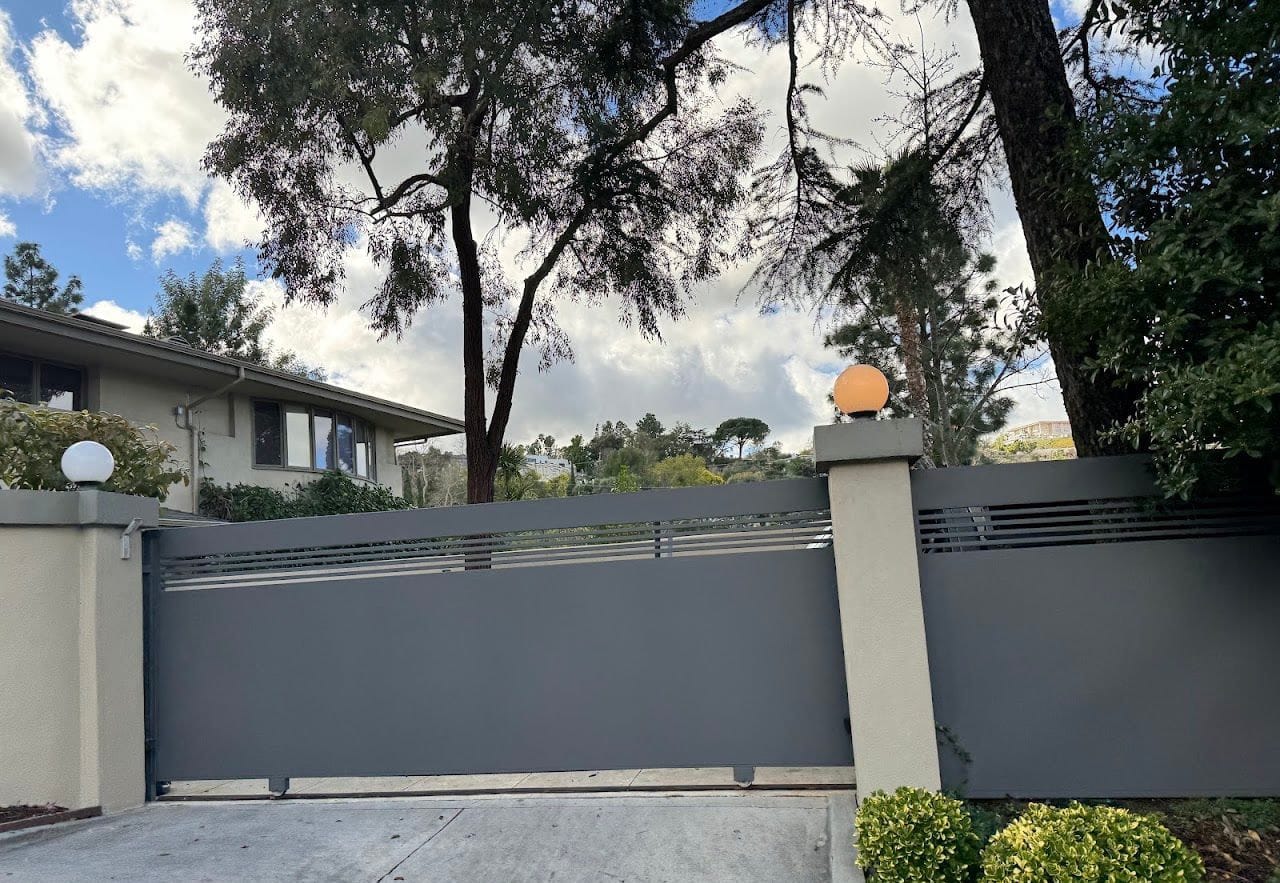
Real job photos. We do not show where each one was taken.
See the whole job: Modern metal slat gate and fenceKey takeaways
- Move the gate by hand with the operator released — that single test separates gate problems from operator problems.
- A dragging or binding gate destroys operators; replacing the motor without fixing alignment repeats the failure.
- Photo eyes and reversing sensors are safety equipment and should be tested monthly.
- Gate posts and their footings carry a moving load and are the usual root cause of sag.
- Sliding gates fail at rollers, track debris and the guide; swing gates fail at hinges and posts.
- Every automated gate needs a manual release everyone in the household knows how to use.
Questions people ask
Why does my automatic gate keep reversing?
Usually the operator is meeting resistance and doing exactly what it should. Check for an obstruction in the track or swing path, debris on a slide track, a dirty or misaligned photo eye, or a gate that has begun to bind at the hinges or rollers. Increasing the force setting to push through resistance is the wrong response and is unsafe.
How do I know if the problem is the gate or the operator?
Release the operator using the manual disconnect and move the gate by hand. If it swings or slides smoothly and stays where you leave it, the gate is fine and the fault is electrical or in the operator. If it is stiff, drags, or drifts closed, the mechanical problem must be fixed first — the operator is only the thing that noticed it.
How often should a driveway gate be serviced?
A yearly service is reasonable for most residential gates, more often for a gate cycling many times a day or on a dusty site. Service covers lubrication of hinges and rollers, hardware tightening, track cleaning, alignment check, safety device testing, and inspection of the operator and its power supply.
What safety devices does an automatic gate need?
Automatic vehicular gates are governed by safety standards that require entrapment protection — typically photo eyes and inherent reversing sensing — along with correct edge and gap treatment. These prevent a heavy powered gate from closing on a person, a child or a vehicle. They must be present, working and tested, not disabled because they are triggering.
Why does my gate work sometimes and not others?
Intermittent behaviour usually points to power, a marginal battery in a solar or battery-backed system, a failing remote or receiver, a photo eye affected by low sun angle or moisture, or a mechanical bind that only occurs at a certain point in the travel or a certain temperature. Note when it fails — the pattern is the diagnosis.
Can a gate be opened during a power outage?
Yes, and you should know how before it happens. Every operator has a manual release, usually a key-operated disconnect, that lets the gate be moved by hand. Some systems also have battery backup. Make sure everyone in the household knows where the release is and how to use it.